

Now is the time for Asian high yield investors to consider going global

For Asian high yield investors, the case for going global is becoming harder to ignore. As growth, inflation and policy diverge across regions, a broader opportunity set gives investors more freedom to target the potential best opportunities.

Key Takeaways
  • A global approach to high yield bond investing can offer Asian investors diversification, scale and flexibility to capitalise on regional differences in growth, rates and policy.
  • Adding exposure to US high yield is especially attractive because we believe the market is less exposed to energy-driven inflation than either Asia or Europe.
  • Average global high yield credit ratings are similar to Asia but the opportunity set is larger; the yield difference between Asian and US high yield is close to lows.

For clients seeking an attractive long-term allocation within high yield bonds, we believe a global approach stands out against Asia-only. A regional mandate narrows the investable universe to one market and one dominant currency, whereas a global strategy opens access to the US, Europe, the UK and emerging markets. The difference is material: the global high yield universe is worth roughly USD 2.4 trillion – over 50 times the size of the Asian high yield universe and 60% larger than the US high yield universe.1

Adding US high yield bonds to Asian portfolios may be particularly beneficial in the current environment because the US appears to be less exposed to the energy price shock than Asia. Is now the time for Asian high yield investors to go global?

Asia is more exposed to Iran crisis than the US

The situation in the Middle East remains fluid; however, a few implications have emerged that are likely to affect credit fundamentals. Rising energy prices have already impacted inflation around the world, and although oil prices appear to have passed their peak, we think they are likely to remain above pre-war levels. Capacity has been destroyed and will take time to rebuild.

These pressures will be felt most strongly in Asia and Europe, which are more reliant on energy imports than the US. Higher energy prices also feed through into fertiliser and pesticide costs, adding pressure to food prices. We note that credit fundamentals globally remain reasonably strong, and we do not expect a rapid increase in default rates, but we believe the momentum is more likely to turn negative in Asia than in the US within the same rating categories.

The US is not immune to inflationary pressures, of course. We expect interest rates globally to remain high and potentially rise further. Leverage and interest coverage ratios in Asia remain worse than the US, however, with Asia less able to absorb higher refinancing costs (Exhibit 1). Additionally, the short-term to total debt ratio is higher in Asia than in the US (Exhibit 2). This means Asian companies will need to refinance earlier, while also facing higher rates and weakening fundamentals.

Exhibit 1
US and Asian leverage and interest coverage ratios
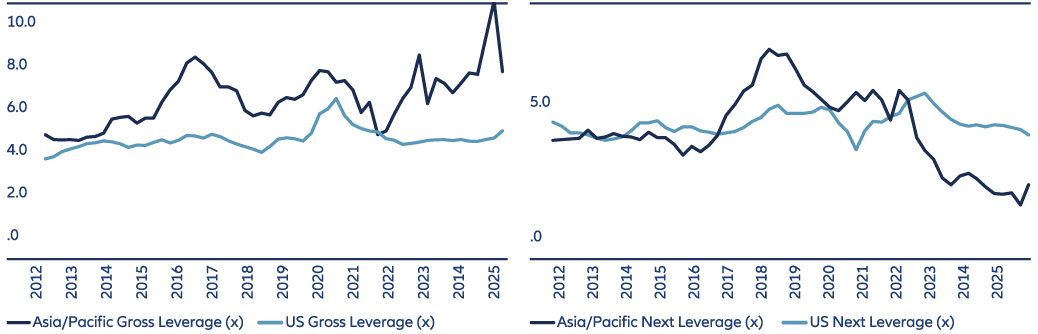
Exhibit 1: US and Asian leverage and interest coverage ratios

Source: Bank of America, February 2026.

Exhibit 2
The short-term to total debt ratio is higher in Asia than the US
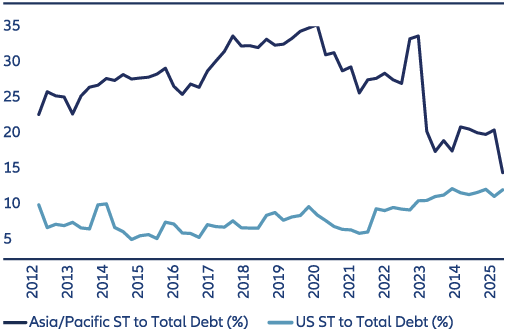
Exhibit 2: The short-term to total debt ratio is higher in Asia than the US

Source: Bank of America, February 2026.

Based on this analysis, we believe the US is currently more appealing than Asia or Europe for high yield bond investors. Some parts of the Latin American and African markets may also benefit from lower energy prices. Although these markets are much smaller than the US, they may be useful diversifiers for Asian investors.

Given our expectation of an inflationary environment, it’s worth mentioning that, as an asset class, high yield across all regions can benefit from inflation. When it supports nominal earnings while debt remains unchanged, this can allow for faster deleveraging. In addition, if all-in yields rise, the need for allocations to equity and less liquid asset classes may fall, which can provide technical support for the market.

Global high yield allows investors to pick the sweet spots

A key argument for a global approach is that it offers investors a larger universe of high yield bonds – more issuers, more sectors, deeper liquidity and a broader opportunity set (Exhibit 3). Credit spreads in Asia are currently about 60 basis points higher than the US. This compares with about 85 basis points a year ago using the same indices. Given our view that the US offers more defensive credit-fundamental momentum as well as stronger credit metrics, we are not convinced that this difference in spread is wide enough. Asian investors therefore have room to adopt a more global approach, without giving up too much spread, while dramatically increasing diversification.

Exhibit 3
Comparison of credit spreads across high yield markets
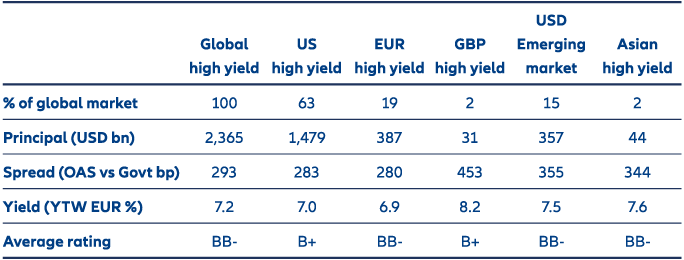
Exhibit 3: Comparison of credit spreads across high yield markets

Source: ICE, 30 April 2026. EUR equivalents using a one-year cross-currency spread matrix. Table excludes CEEMEA and CAD HY which are included in global high yield statistics.

Asia offered abnormally high yields during the China property crisis, but this was not reflected in returns. Over the past two years, many weak credits are no longer in the Asia index and this has led to a normalisation of yields. As a result the extra yield offered by Asia is close to the lows of the last 10 years (Exhibit 4).

Exhibit 4
Comparison of yields between Asia and global high yield
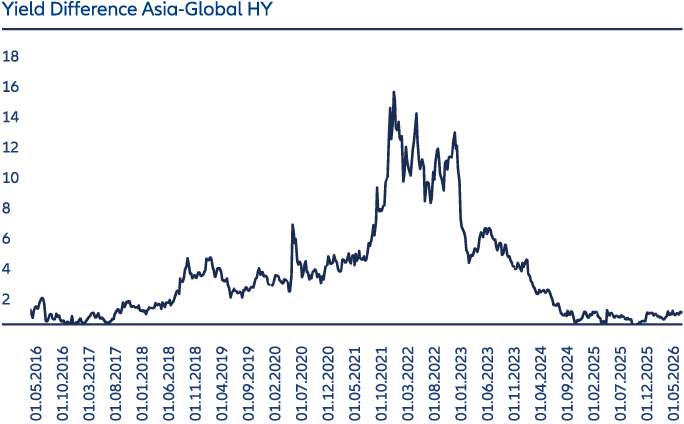
Exhibit 4: Comparison of yields between Asia and global high yield

Source: Allianz Global Investors, May 2026.

History also supports the case for staying global. No single high yield market has led performance consistently over time. Return leadership across European, UK, US and emerging market high yield has rotated frequently from year to year, with meaningful differences between the best and worst-performing regional markets (Exhibit 5). For investors, that is a powerful argument against a static home-market allocation and in favour of a strategy that can move dynamically toward the most attractive opportunities as valuations and fundamentals change.

Exhibit 5
Annual returns of regional high yield markets
Total Return % – USD hedged

Exhibit 5: Annual returns of regional high yield markets

Source: Allianz Global Investors, Bloomberg, ICE Bank of America Merrill Lynch, 31 March 2026. Past performance does not predict future returns.

Importantly, choosing global does not mean giving up the attractive features of Asian high yield. Asia still offers appealing spread and quality characteristics, and we see clear value in selected parts of the market. The advantage of a global strategy is that it allows clients to retain that exposure while avoiding unnecessary concentration. It also enables a more selective stance towards the weakest credits, where default risk remains concentrated in more esoteric issuers with thinner equity cushions and weaker liquidity. In our view, the ability to combine higher-quality Asian exposure with the best opportunities from the US and other markets is a much stronger proposition than remaining confined to one region.

1 Source: ICE BofA indices, June 2026.

Information herein is based on sources we believe to be accurate and reliable as at the date it was made. We reserve the right to revise any information herein at any time without notice. No offer or solicitation to buy or sell securities and no investment advice or recommendation is made herein. In making investment decisions, investors should not rely solely on this material but should seek independent professional advice. However, if you choose not to seek professional advice, you should consider the suitability of the product for yourself. Investment involves risks including the possible loss of principal amount invested and risks associated with investment in emerging and less developed markets. Past performance of the fund manager(s), or any prediction, projection or forecast, is not indicative of future performance. This material has not been reviewed by any regulatory authorities.

Issuer:
Hong Kong – Allianz Global Investors Asia Pacific Ltd.

5759268

Allianz Global Investors

You are leaving this website and being re-directed to the below website outside Hong Kong. This does not imply any approval or endorsement of the information by Allianz Global Investors contained in the redirected website nor does Allianz Global Investors accept any responsibility or liability in connection with this hyperlink and the information contained herein. Please keep in mind that the redirected website may contain funds and strategies not authorized for offering to the public of Hong Kong. Besides, please also take note of the redirected website's terms and conditions, privacy and security policies, and other legal information. By clicking "Continue", you confirm that you acknowledge the details mentioned above and would like to continue accessing the redirected website. Please click "Stay here" if you have any concerns.

Welcome to Allianz Global Investors

Select your language
  • 中文(繁體)
  • English
Select Role
  • Retail Investor
  • Institutional Investors
  • Pension Investors
  • Allianz Global Investors Fund (“AGIF”)

     • Allianz Global Investors Fund (“AGIF”) as an umbrella fund under the UCITS regulations has within it different Sub-Funds investing in fixed income securities, equities, and derivative instruments, each with a different investment objective and/or risk profile.

    All Sub-Funds may invest in financial derivative instruments (“FDI”) which may expose to higher leverage, counterparty, liquidity, valuation, volatility, market and over the counter transaction risks. A Sub-Fund’s net derivative exposure may be up to 50% of its net asset value (“NAV”). 

    Some Sub-Funds as part of their investments may invest in any one or a combination of the instruments such as fixed income securities, emerging market securities, and/or mortgage-backed securities, asset-backed securities, property-backed securities (especially REITs) and/or structured products and/or FDI, exposing to various potential risks (including leverage, counterparty, liquidity, valuation, volatility, market, fluctuations in the value of and the rental income received in respect of the underlying property, and over the counter transaction risks). 

    Some Sub-Funds may invest in single countries or industry sectors (in particular small/mid cap companies) which may reduce risk diversification. Some Sub-Funds are exposed to significant risks which include investment/general market, country and region, emerging market (such as Mainland China), creditworthiness/credit rating/downgrading, default, asset allocation, interest rate, volatility and liquidity, counterparty, sovereign debt, valuation, credit rating agency, company-specific, currency (in particular RMB), RMB debt securities and Mainland China tax risks. 

    Some Sub-Funds may invest in convertible bonds, high-yield, non-investment grade investments and unrated securities that may be subject to higher risks (including volatility, loss of principal and interest, creditworthiness and downgrading, default, interest rate, general market and liquidity risks) and therefore may adversely impact the net asset value of the Sub-Funds. Convertibles will be exposed prepayment risk, equity movement and greater volatility than straight bond investments.

    Some Sub-Funds may invest a significant portion of the assets in interest-bearing securities issued or guaranteed by a non-investment grade sovereign issuer (e.g. Philippines) and is subject to higher risks of liquidity, credit, concentration and default of the sovereign issuer as well as greater volatility and higher risk profile that may result in significant losses to the investors. 

    Some Sub-Funds may invest in European countries. The economic and financial difficulties in Europe may get worse and adversely affect the Sub-Funds (such as increased volatility, liquidity and currency risks associated with investments in Europe).

    Some Sub-Funds may invest in the China A-Shares market, China B-Shares market and/or debt securities directly via the Stock Connect or the China Interbank Bond Market or Bond Connect or other foreign access regimes and/or other permitted means and/or indirectly through all eligible instruments and thus is subject to the associated risks (including quota limitations, change in rule and regulations, repatriation of the Sub-Fund’s monies, trade restrictions, clearing and settlement, China market volatility and uncertainty, China market volatility and uncertainty, potential clearing and/or settlement difficulties, change in economic, social and political policy in the PRC and Mainland China tax risks).  

    Some Sub-Funds may adopt the following strategies, Socially Responsible Investment (Proprietary Scoring) Strategy, SDG-Aligned Strategy, Sustainability Key Performance Indicator Strategy (Relative), Green Bond Strategy, Multi Asset Sustainable Strategy, Sustainability Key Performance Indicator Strategy (Absolute Threshold), Environment, Social and Governance (“ESG”) Score Strategy, and Sustainability Key Performance Indicator Strategy (Absolute). The Sub-Funds may be exposed to sustainable investment risks relating to the strategies (such as foregoing opportunities to buy certain securities when it might otherwise be advantageous to do so, selling securities when it might be disadvantageous to do so, and/or relying on information and data from third party ESG research data providers and internal analyses which may be subjective, incomplete, inaccurate or unavailable and/or reducing risk diversifications compared to broadly based funds). Also, some Sub-Funds may be particularly focusing on the greenhouse gas emissions (“GHG”) efficiency of the investee companies rather than their financial performance. These may have an adverse impact on the performance of the Sub-Funds.

    Some Sub-Funds may invest in share class with fixed distribution percentage (Class AMf). Investors should note that fixed distribution percentage is not guaranteed. The share class is not an alternative to fixed interest paying investment. The percentage of distributions paid by these share classes is unrelated to expected or past income or returns of these share classes or the Sub-Funds. Distribution will continue even the Sub-Fund has negative returns and may adversely impact the net asset value of the Sub-Fund.  Positive distribution yield does not imply positive return.

    Investment involves risks that could result in loss of part or entire amount of investors’ investment.

    In making investment decisions, investors should not rely solely on this [website/material].


    Note: Dividend payments may, at the sole discretion of the Investment Manager, be made out of the Sub-Fund’s capital or effectively out of the Sub-Fund’s capital which represents a return or withdrawal of part of the amount investors originally invested and/or capital gains attributable to the original investment. This may result in an immediate decrease in the NAV per share and the capital of the Sub-Fund available for investment in the future and capital growth may be reduced, in particular for hedged share classes for which the distribution amount and NAV of any hedged share classes (HSC) may be adversely affected by differences in the interests rates of the reference currency of the HSC and the base currency of the respective Sub-Fund, particularly if such HSC are applying the IRD Neutral Policy. Dividend payments are applicable for Class A/AM/AMg/AMi/AMgi/AQ Dis (Annually/Monthly/Quarterly distribution) and for reference only but not guaranteed.  Positive distribution yield does not imply positive return. For details, please refer to the Sub-Fund’s distribution policy disclosed in the offering documents.


    Allianz Global Investors Asia Fund

    Allianz Global Investors Asia Fund (the “Trust”) is an umbrella unit trust constituted under the laws of Hong Kong pursuant to the Trust Deed. Allianz Thematic Income and Allianz Selection Income and Growth and Allianz Yield Plus Fund are the sub-funds of the Trust (each a “Sub-Fund”) investing in fixed income securities, equities and derivative instruments, each with a different investment objective and/or risk profile.

    Some Sub-Funds are exposed to significant risks which include investment/general market, company-specific, emerging market, creditworthiness/credit rating/downgrading, default, volatility and liquidity, valuation, sovereign debt, thematic concentration, thematic-based investment strategy, counterparty, interest rate changes, country and region, asset allocation risks and currency (such as exchange controls, in particular RMB), and the adverse impact on RMB share classes due to currency depreciation.  

    A Sub-Fund may invest in asset-backed securities (“ABS”) and mortgage-backed securities (“MBS”) which may be highly illiquid and prone to substantial price volatility. These instruments may be subject to greater general market risk, concentration risk, credit and counterparty default risk, liquidity risk and interest rate risk compared to other debt securities.

    Some Sub-Funds may invest in high-yield (non-investment grade and unrated) investments and convertible bonds which may be subject to higher risks, such as volatility, creditworthiness, default, interest rate changes, general market and liquidity risks and therefore may  adversely impact the net asset value of the Sub-Fund. 

    All Sub-Funds may invest in financial derivative instruments (“FDI”) which may expose to higher leverage, counterparty, liquidity, valuation, volatility, market and over the counter transaction risks.  The use of derivatives may result in losses to the Sub-Funds which are greater than the amount originally invested. A Sub-Fund’s net derivative exposure may be up to 50% of its net asset value (“NAV”).

    These investments may involve risks that could result in loss of part or entire amount of investors’ investment.

    In making investment decisions, investors should not rely solely on this website.

    Note: Dividend payments may, at the sole discretion of the Investment Manager, be made out of the Sub-Fund’s income and/or capital which in the latter case represents a return or withdrawal of part of the amount investors originally invested and/or capital gains attributable to the original investment. This may result in an immediate decrease in the NAV per distribution unit and the capital of the Sub-Fund available for investment in the future and capital growth may be reduced, in particular for hedged share classes for which the distribution amount and NAV of any hedged share classes (HSC) may be adversely affected by differences in the interests rates of the reference currency of the HSC and the base currency of the Sub-Fund, particularly if such HSC are applying the IRD Neutral Policy. Dividend payments are applicable for Class A/AM/AMg/AMi/AMgi Dis (Annually/Monthly distribution) and for reference only but not guaranteed.  Positive distribution yield does not imply positive return. For details, please refer to the Sub-Fund’s distribution policy disclosed in the offering documents.

Please indicate you have read and understood the Important Notice.